




















 Loading...

The digital gaming ecosystem is a spectrum. On one end lies the serene, meditative stillness of a virtual coloring book; on the other, the adrenaline-fueled, split-second chaos of an endless runner. It is in this latter, high-octane arena that "Butterfly Dash," a vibrant HTML5 game hosted on GamePix, takes flight. But to dismiss it as just another fast-paced arcade game would be a profound oversight. Butterfly Dash is a meticulously engineered experience that fuses the delicate aesthetic of nature with the demanding mechanics of reflex-based gaming. It is a test of dexterity, a trainer for cognitive agility, and a surprisingly deep lesson in the psychology of focus and flow. This article is an exhaustive exploration of Butterfly Dash, from its core mechanics and visual energy to its cognitive benefits and the strategies one can employ to not just play, but to master the dash.
First Impressions and the Siren Call of Speed
From the very moment the game loads on the GamePix platform, the player is greeted with a marked shift in energy. Unlike its more tranquil, creativity-focused butterfly-themed cousins, Butterfly Dash wastes no time in establishing its tempo. The title screen is often a burst of kinetic energy—vivid, saturated colors, dynamic fonts that seem to swoop with implied motion, and a background that hints at the vertiginous journey ahead. The butterfly, the game’s protagonist, is not presented in a static, posed illustration. It is caught mid-flight, wings angled for velocity, projecting an aura of urgent grace.
The interface remains commendably simple, faithful to the "pick up and play" philosophy of casual gaming, but the aesthetic cues are fundamentally different. The color palette, while still nature-inspired, is dialed up. The greens of the forests are deeper, the blues of the sky are electric, and the flowers and fruits are rendered in juicy, popping hues that practically demand to be collected. The "Play" button feels less like a gentle invitation and more like a starting pistol. This immediate, visceral communication of core purpose—speed, action, collection—is a masterclass in game design. Before you’ve even tapped the screen, your heart rate has subtly increased, and your mind is primed for a challenge. This is not a lullaby; this is a chase, and you are both the pursuer and the pursued.
The Core Mechanics: The Genius of Single-Touch Flight Dynamics
The foundational mechanic of Butterfly Dash is brilliantly reductive: a single touch controls everything. The butterfly flies forward automatically, ascending on a soft, gravity-defying arc when the screen is touched or the mouse button is held, and descending into a graceful swoop when it is released. This is the quintessential "flappy" mechanic, refined and re-contextualized within a side-scrolling runner framework. The entire game is a continuous, flowing negotiation between these two states—powered ascent and natural descent.
This binary control scheme is the secret to the game's addictive nature. It is so simple that anyone can understand it in a second, yet its mastery is a pursuit that can last for hours. The challenge does not come from memorizing complex button combos, but from developing a near-telepathic rhythm between your fingertip, your eyes, and the butterfly on the screen. The game demands a predictive touch. You are not reacting to where the butterfly is; you are guiding it to where it needs to be in a fraction of a second. A tap is a commitment to a trajectory.
The butterfly itself is not a weightless cursor. The developers have subtly imbued it with a sense of momentum and inertia. A rapid, panicked flurry of taps will result in a jerky, inefficient flight path, while smooth, rhythmic, and well-spaced presses create an elegant, sinusoidal wave that naturally weaves through obstacles and collects items. The game is a mirror. It reflects the player’s internal state back at them. A tense, anxious player will tense up, tap erratically, and crash. A calm, focused player will find a groove, their breathing syncing with the rise and fall of the butterfly. The single-touch mechanic is not a limitation; it is a philosophical statement that profound depth can be found within radical simplicity.
The World of the Dash: Obstacles, Collectibles, and Layered Objectives
An endless runner is defined not just by its movement, but by the world it traverses, and Butterfly Dash populates its vibrant side-scrolling environment with a carefully designed ecosystem of obstacles and rewards. The primary antagonistic elements are the obstacles, which commonly take the form of towering plants, thorny vines, or predatory insects waiting with open mandibles. These are often arranged in configurations that require specific flight maneuvers: a high-low-high pattern that demands a long press followed by a quick release-tap, or a narrow passage that tests the player’s ability to maintain a steady, centered altitude.
The visual design of these obstacles is critical. They are rendered in a style that is hostile but not frightening, clearly communicating danger through spikes and dark color accents while remaining appropriate for a broad audience. Crucially, their hitboxes are forgiving. A brush against a leaf’s edge might be safe, while contact with a central thorn is fatal. This nuanced collision detection is a hallmark of fair design; when you crash, it feels like your fault, not the game’s.
In stark, glittering contrast to these dangers are the collectibles, the shimmering nectar drops, pollen puffs, or tiny glowing orbs scattered in graceful arcs and trails across the sky. They serve a layered purpose. On the surface, they are the score, a quantifiable measure of a run’s success. But their deeper function is as a rhythm guide. The developers have not placed these collectibles randomly. They are breadcrumbs. The optimal flight path to collect them all is also, invariably, the safest path through the obstacles. A player who greedily chases the nectar is being subtly tutored in the game’s ideal rhythm. The collectibles turn the reactive task of "avoiding danger" into the proactive, rewarding task of "pursuing treasure." This shift in psychology is immense. You are no longer a fragile creature running away; you are a treasure hunter on a magical flight, and the obstacles are just puzzles placed between you and your glittering prize.
The Visual Symphony: Crafting a Kinetic, Enchanting World
The art direction of Butterfly Dash is a high-definition, candy-coated dream. It takes the gentle aesthetic of a garden and infuses it with the energy of a fireworks display. The game employs a multi-layered parallax scrolling background that creates a profound sense of depth and speed. In the very back, soft-focus, majestic mountains or a setting sun drift by slowly. In the midground, detailed trees and giant, glowing mushrooms slide past at a moderate pace. In the foreground, the sharp, high-contrast obstacles and collectibles whip by, keeping the player’s eyes locked on the immediate flight path.
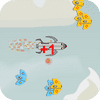
This parallax effect is not just visually beautiful; it is a critical piece of functional design. It provides a non-distracting velocity reference, helping the player’s brain intuitively judge the butterfly’s speed without needing a HUD element. The color design continues to communicate game-state. The palette is rich and warm—magenta, gold, emerald, and cobalt—creating a world that feels alive and hyper-real. When a nectar drop is collected, it doesn’t just vanish; it bursts in a satisfying shower of particles that briefly trail the butterfly, adding a tactile layer of reward to every successful action.
The butterfly avatar itself is often the most visually dynamic element. It may leave a shimmering, translucent after-image trail that traces its path, a visual representation of your flight history. This trail not only looks magical but also helps you judge your own movement smoothness. Power-ups might transform the butterfly, surrounding it with a fiery aura, a lightning shield, or a whirlwind of protective petals. This constant, fluid visual feedback is what makes the game feel so responsive and alive. It's a sensory loop of motion, color, and particle effects that keeps the player completely absorbed in the present moment.
The Audio Pulse: Music and Sound as Gameplay Cues
The soundscape of Butterfly Dash is not a passive background element; it is an active participant in the gameplay, a sonic co-pilot that provides crucial information and amplifies the emotional stakes. The music is an upbeat, looping electronic or orchestral track with a driving, energetic tempo. It’s not the ambient wash of a relaxation game, but a motivational anthem designed to push you forward. The BPM (beats per minute) is often subtly calibrated to the ideal tapping rhythm, acting as an unconscious metronome that a skilled player can lock into.
The diegetic sound effects are crisp, immediate, and highly communicative. The "pop" of collecting a nectar drop is a high-pitched, sparkling chime that triggers a micro-dose of satisfaction. The sound of successfully navigating a tight space might be a subtle whoosh. The crucial audio cue, however, is the sound of failure—the soft, sad thud or a gentle, glassy shattering when the butterfly hits an obstacle. This sound is designed not to be punishingly harsh, but to be a clear, unambiguous signal of interruption, prompting immediate reflection and the desire to restart.
Power-ups and milestones have their own triumphant fanfares. A "magnet" power-up might activate with a shimmering, ascending scale, while breaking a high-score barrier could trigger a special celebratory melody. The seamless, gapless integration of these sounds creates a unified audio-visual experience. The eyes, the fingers, and the ears are all engaged in a singular, synchronized flow state. For the player, this means the information needed to play successfully is delivered through multiple sensory channels, reducing the cognitive load on any single sense and making the high-speed action feel intuitive and navigable.
The Psychological Cockpit: Training Reflexes, Focus, and the Flow State
Butterfly Dash is more than an amusing diversion; it is a highly effective cognitive training tool disguised as a game. The primary mental faculty it hones is divided attention and rapid task-switching. The player must simultaneously track the butterfly’s vertical position, scan ahead for upcoming obstacles, plan the trajectory to the next nectar cluster, and monitor the on-screen distance or score counter. This is an intense workout for the brain’s executive functions, the same cognitive resources used to navigate a busy intersection or manage multiple tasks at work.
The game is also a pure, distilled test of the psychological flow state, a concept famously coined by psychologist Mihaly Csikszentmihalyi. Flow is the state of being completely absorbed in an activity where the challenge level is perfectly matched to your skill level, time seems to dissolve, and self-consciousness fades away. Butterfly Dash is an engine for producing this state. As the game speed progressively increases, the difficulty curve dynamically stretches just ahead of the player’s current ability. It’s always slightly out of reach, pulling you into a state of hyper-focused, fluid performance. You don’t think "I need to tap now"; your fingers simply execute the tap, bypassing the slower, verbal part of the brain.
This state of emergency calm has therapeutic implications. For individuals with anxiety, the game’s demand for total, present-moment focus acts as a powerful circuit-breaker for rumination. You cannot simultaneously worry about a future event and navigate a butterfly through a gauntlet of thorns. The external, fast-paced focus forcefully anchors your consciousness in the present moment. The regular, rhythm-based tapping can also serve as a breathing pacer, with the tap-and-release pattern syncing with a slow exhale and inhale. After a high-intensity game session, a player often emerges feeling mentally "clean," as if the fragmented thoughts have been defragmented by the sheer, imperative demand of the dash.
The Structure of Progress: Missions, Skins, and the Unlockable World
To transform a fleeting arcade game into a sticky, long-term hobby, a system of meta-progression is required, and Butterfly Dash often integrates this masterfully. The game structures player engagement through a series of daily missions and long-term achievements. "Collect 500 nectar drops in one run," "Fly 1000 meters without collecting anything," "Score 50 points while a magnet is active." These are not just arbitrary chores; they are lateral thinking puzzles. They challenge the player to break their own optimized habits, to play in a new, sub-optimal style, and in doing so, they inadvertently teach a deeper, more versatile mastery of the game’s flight model.
The most compelling reward for completing these challenges is often not a score multiplier, but a cosmetic unlockable—a new butterfly skin. This is a profoundly effective motivational loop that taps into our deep-seated desire for novelty and self-expression. One skin might transform your avatar into a majestic blue morpho butterfly with trailing, ethereal wings. Another might be a blazing fire-butterfly that leaves a trail of embers. Yet another could be a cybernetic, pixel-art butterfly from a digital realm. These skins are badges of honor. When you see another player’s screen, or even just review your own selection screen, you are reminded of the specific challenge you conquered to earn that beautiful, shimmering form. This turns cosmetic change into narrative memory. You’re not just playing to be the best; you’re playing to earn the right to look beautiful in your own unique way.
This progression system also introduces an element of strategic choice. Perhaps one butterfly skin has a subtly clearer visibility against the background, making obstacles easier to read. You are building a relationship with your avatar. This deepened connection to the digital self turns a simple arcade runner into a personal collection, a wardrobe of earned memories that make every run feel like a continuation of a personal, unfolding story.
The Master’s Code: Advanced Strategies and Tactical Flight
To truly help players excel, we must move beyond basic play and into the realm of strategy. Mastering Butterfly Dash requires a deliberate shift from reaction to prediction, from seeing to reading. The golden rule is look to the horizon, not at the butterfly. A novice player’s eyes are glued to the insect itself. An expert’s gaze is fixed on the right-hand edge of the screen, processing the upcoming obstacle pattern as early as possible. This gives the brain an extra half-second of processing time, an eternity in a game of split-second reactions. Your peripheral vision is sufficient to track your butterfly; your focal vision must be a scout.
The second core principle is the sinusoidal rhythm. The most common cause of death is a panicky, arrhythmic series of taps that overcorrects the butterfly’s altitude. The corrective response to a near-miss at the top of the screen is often to release the screen for too long, sending the butterfly plummeting into a ground obstacle. To combat this, practice maintaining a smooth, gentle sine wave. Your flight path should look like a rolling wave on a calm sea. This rhythmic pattern is not just safe; it’s energy-efficient. It places the butterfly in a predictable middle zone for the maximum amount of time, giving you the most options for the next maneuver.
Finally, one must learn the art of tactical sacrifice. The presence of collectibles creates a constant negotiation between safety and greed. The "perfect" run does not always collect everything. An expert player is a rapid cost-benefit analyst. They see a nectar drop hovering dangerously close to a thorn and, in a split second, choose to ignore it. They preserve the life of the run over the minor point gain. This discipline—the wisdom to know what not to collect—is a true mark of mastery. It is a direct training in impulse control. You are learning to override the brain’s dopamine-driven urge for the shiny object in favor of a higher, long-term goal: the new high score. This is a life skill played out at 60 frames per second.
The Comparative Field: Butterfly Dash in the Endless Runner Genre
To fully appreciate Butterfly Dash, we must place it within the pantheon of the "endless runner" genre, popularized by titans like Temple Run and Subway Surfers and the minimalist Flappy Bird. Butterfly Dash takes the core DNA of these games and elegantly synthesizes them into a new, highly refined organism. From Flappy Bird, it inherits the pure, single-touch, gravity-based flight mechanic and the unforgiving, one-hit-death tension. From the 3D runners, it inherits the layered depth, the detailed, charming world, the mission-based progression, and the extensive cosmetic unlockables.
What Butterfly Dash contributes that is uniquely its own is its aesthetic coherence. Where Flappy Bird is a stark, almost brutally minimalist pixel-art world, and the 3D runners are often set in gritty urban or temple-ruin environments, Butterfly Dash offers a world of lush, enchanting, high-fantasy nature. It’s the endless runner, but set in a magical garden. This thematic choice has a significant impact on its emotional footprint. The frustration of death, while present, is softened by the sheer beauty of the world you are re-entering. The "one more try" impulse is driven not just by the sting of failure, but by the desire to re-immerse yourself in the shimmering, colorful, and musically uplifting environment. It is the endless runner for those who find the concrete jungles and temple traps of other genre leaders too aesthetically harsh. It proves that high-tension, high-challenge gameplay and a gentle, beautiful world are not mutually exclusive; they are, in fact, a magical combination.
The Helping Hand: Using Butterfly Dash as a Tool for Focus and Regulation
Beyond entertainment, how can this game be practically used to help people in their daily lives? Butterfly Dash is a portable, instantly accessible tool for cognitive and emotional self-regulation. For students and knowledge workers, it serves as a powerful focus primer. Playing a single, focused run before sitting down to a difficult task acts as a cognitive warm-up. It activates the neural networks responsible for sustained attention and hand-eye coordination, making the subsequent work session feel more fluid. It’s like a dynamic stretching routine for the brain’s executive control systems.
For parents, the game is a secret weapon against the restless energy of a "bored" child in a waiting room or on a long car ride. But its benefits run deeper than mere distraction. For children with attention-deficit challenges, the game’s rapid, clear, and immediate feedback loop can be a uniquely effective way to engage and sustain focus in short, intense bursts. The clear cause-and-effect (tap to go up, release to go down, touch thorn to fail) is a simple, non-verbal language of consequence that can be very grounding.
For anyone seeking a mindfulness practice that doesn't involve sitting still, Butterfly Dash is a form of active meditation. The practice is to focus entirely on the rhythm of your taps and the flight of the butterfly. The moment a thought about the past or future intrudes, you will likely make a mistake. The game instantly and neutrally alerts you to your mental wandering. You breathe, restart, and gently bring your focus back to the single, moving point on the screen. It is a biofeedback device for the mind, teaching you to catch and release distracting thoughts with the same agility you use to dodge a digital thorn. It makes the abstract concept of "present moment awareness" a concrete, urgent, and learnable skill.
The Infinite Horizon: Long-Term Satisfaction and the Pursuit of the High Score
In a game with no final level, no end credits, where does long-term satisfaction reside? It resides in the deeply personal, internal metric of the "High Score." This number, glowing at the top of the screen, is not a comparison to a global leaderboard for most; it is a comparison to your past self. The joy of Butterfly Dash is a journey of self-transcendence. The first time you break 50 points, it’s a triumph. The first time you break 100, it’s a milestone. Each new high score is a quantifiable piece of evidence that you are getting better, that your reflexes are sharpening, your focus is deepening, and your rhythm is becoming more attuned.
This pursuit of self-improvement is one of the purest and most sustainable forms of human motivation. The game becomes a personal diary of growth. The run where you finally achieved a perfect rhythm, the run where you didn't panic in a complex obstacle pattern, the run where your fingers just knew what to do—these become stored not just as a number, but as a felt memory of peak performance. The infinite, procedurally generated nature of the game guarantees that no two runs are ever the same. The horizon is always fresh, always challenging, and always waiting to be crossed.
This makes Butterfly Dash a lifelong companion in a digital pocket. It’s an experience you can return to across months and years, and its challenge remains pristine. You can’t memorize a track; you can only cultivate a skill. And as life changes, the game remains a steady benchmark. It’s a place you can return to check in on your own cognitive sharpness, a familiar, high-speed garden that always welcomes you back for one more dash. The goal is not to win, for there is no winning. The goal is to fly, to focus, and to find, for a few shimmering, high-speed moments, the perfect, unbroken line of a master in flight.
Embed this game